








Domestic goose
Anser anser domesticus Very common
 Uncommon
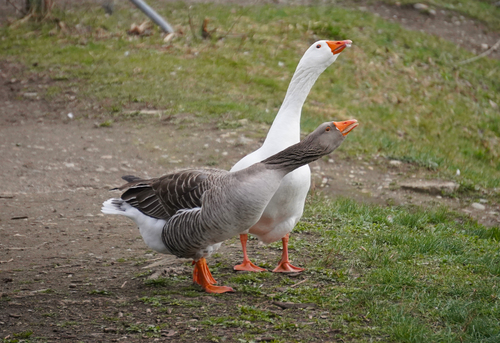
Aves Anser anser domesticus, commonly known as the domestic goose, is a bird species in the Anatidae family. This domesticated bird is derived from the wild greylag goose (Anser anser) and is an integral part of rural and agricultural life in many regions, including the Comunidad Valenciana, where it is sometimes referred to as "ganso doméstico".
Characteristics:
- Size: Domestic geese are notably larger than their wild counterparts due to selective breeding, with an average weight ranging from 4 to 9 kilograms.
- Appearance: They possess a large body, a long neck, and a broad, rounded beak. Their plumage is typically white, gray, or a mix of both, which reflects their ancestral ties to the greylag goose.
- Vocalization: Known for their honking calls, domestic geese are quite vocal and use a variety of sounds to communicate.
Habitat and Distribution:
- These geese are predominantly found in rural settings, especially in farms and near water bodies like ponds and lakes.
- In the Comunidad Valenciana, domestic geese can often be seen in agricultural areas where they help control pests and weeds through grazing.
Diet:
- A primarily herbivorous species, domestic geese consume grasses, grains, and leafy greens. They are also known to eat small invertebrates when available.
- In managed settings, they are often provided with supplementary feeds that include grains and specially formulated poultry feed to ensure a balanced diet.
Role and Importance:
- Domestic geese are valued for their meat, eggs, and feathers, which have been utilized by humans for centuries.
- Their role as a natural lawnmower is appreciated in farm management, as they help maintain grassland health.
- They also serve as natural pest controllers, reducing the need for chemical pesticides in certain agricultural setups.


 360° Views
 Videos
 Mountain bike
 Vall Agenda
 Weather Stations
 Time Travel
 Flora and Fauna