







Gymnopus dryophilus
 Uncommon
 Common
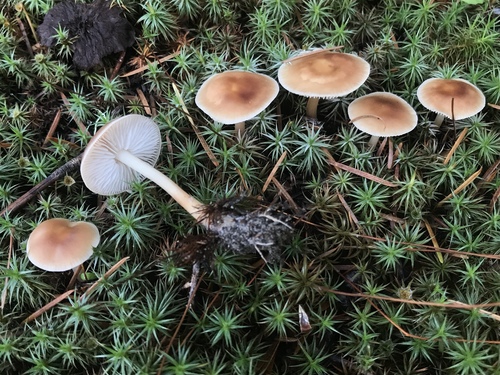
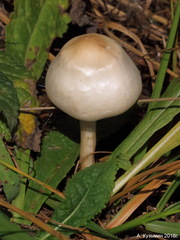
Gymnopus dryophilus is a species of mushroom that can be encountered in the woodlands and forests of the Comunidad Valenciana. Known for its resilience and adaptability, this mushroom thrives in a variety of habitats, typically appearing in autumn but can sometimes be found from late spring to early winter depending on the climate conditions.
Gymnopus dryophilus can be identified by the following characteristics:
- Cap: The cap is convex to flat, usually measuring 2-5 cm in diameter. It is a tawny or ochre to orange-brown color, which can fade over time. The surface is smooth and dry, sometimes becoming slightly wrinkled with age.
- Gills: The gills are white to cream or pale yellow, crowded, and are not attached to the stipe but can appear slightly emarginate.
- Stipe (stem): The stipe is slender, measuring 4-7 cm in length and about 0.2-0.5 cm in diameter. It tends to be the same color or paler than the cap, often with a slightly fibrous texture.
- Flesh: The flesh is thin and whitish, sometimes with a mild to slightly bitter taste.
- Spore print: The spore print is white.
This mushroom is typically found growing on the ground, often on humus or leaf litter, and can sometimes be found in grassy or mossy areas. While not considered highly prized for culinary uses, it plays an important ecological role in the decomposition of organic matter.
Though not generally consumed due to its mediocre taste, knowledge of Gymnopus dryophilus is valuable for those interested in mycology and understanding the biodiversity of the Comunidad Valenciana.


 360° Views
 Videos
 Mountain bike
 Vall Agenda
 Weather Stations
 Time Travel
 Flora and Fauna