







Psathyrella
 Common
 Very common
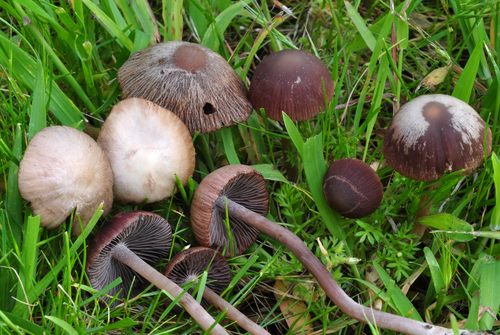
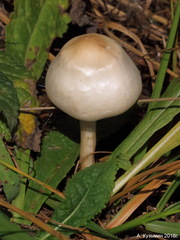
Psathyrella is a genus of fungi that belongs to the family Psathyrellaceae. These mushrooms are commonly found growing in diverse habitats including woodlands, grasslands, and urban areas in the Comunidad Valenciana and beyond. The Psathyrella genus includes numerous species, many of which are small, fragile, and can be easily overlooked. However, they are an integral component of the ecosystem, contributing to the decomposition of organic matter.
Here are some key characteristics of the Psathyrella genus:
- Cap: The caps of Psathyrella mushrooms can vary widely in color and size but are generally thin, ranging from conical to convex, and later becoming broadly convex or flattened. They are often hygrophanous, meaning they change color depending on their moisture content, often appearing darker when wet and paler as they dry out.
- Gills: The gills are usually closely spaced, adnexed to adnate. They tend to be brownish or black due to the spore deposit and can sometimes appear pinkish depending on the species.
- Stipe (Stem): The stipe is typically long, slender, and somewhat brittle. It can be smooth or slightly fibrillose, and its color varies, often echoing the cap color but lighter. Sometimes, a partial veil is present when young.
- Spore Print: Most species in this genus produce a dark purple-brown to black spore print, which is a critical diagnostic feature for identification.
- Ecology: Members of the Psathyrella genus are primarily saprotrophic, meaning they feed on decaying organic material. They play a significant role in nutrient cycling within their ecosystems.
- Edibility: Many Psathyrella species are not considered edible, as they are often too small and unsubstantial, and some may cause mild gastrointestinal upset. Identification can be difficult due to variability among species, so caution is always advised.
In the Comunidad Valenciana, these mushrooms are often found in the autumn and spring seasons, thriving in the humid and temperate conditions that the region provides. Local names for species within this genus may vary, but generally, they are identified by their distinct ecological role and physical characteristics.


 360° Views
 Videos
 Mountain bike
 Vall Agenda
 Weather Stations
 Time Travel
 Flora and Fauna