







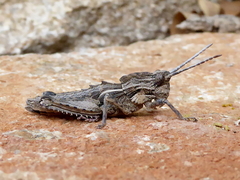

Egyptian grasshopper
Anacridium aegyptium Common
 Very common
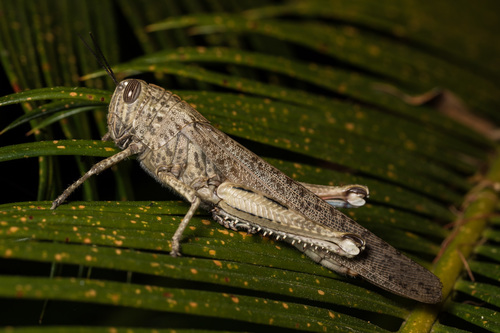
Insecta Anacridium aegyptium, commonly known as the Egyptian locust, is a large grasshopper species that belongs to the family Acrididae. It is one of the most recognizable members of the suborder Caelifera and is frequently observed in various habitats across the Comunidad Valenciana.
Characteristics:
- Size: The Egyptian locust is notable for its impressive size, with adults reaching lengths of up to 70 mm (males) and 90 mm (females).
- Coloration: This species typically exhibits a drab brown or greyish color, which provides excellent camouflage among dry vegetation. It may also have greenish hues, especially in younger individuals or during specific environmental conditions.
- Wings: The wings are long and well-developed, allowing for powerful flight. The hind wings are often transparent with a hint of yellow.
- Antennae: One of the distinctive features of Anacridium aegyptium is its relatively long, banded antennae, which are longer than its head and thorax combined.
Behavior and Ecology:
- Habitat: This species favors open fields, grasslands, and shrublands, often found basking on warm days.
- Diet: As a herbivore, the Egyptian locust feeds primarily on various grasses and shrubs. Its feeding activity can occasionally harm local vegetation, although it rarely reaches pest status.
- Reproduction: During the breeding season, females lay eggs in the soil, which hatch into nymphs. These nymphs resemble miniature adults and undergo several molts before reaching maturity.
Significance: While generally not considered a major agricultural pest in the Comunidad Valenciana, the presence of Anacridium aegyptium is a vital part of the region’s biodiversity. Their role in the ecosystem includes serving as both consumers of vegetation and as prey for various predators, including birds and reptiles.


 360° Views
 Videos
 Mountain bike
 Vall Agenda
 Weather Stations
 Time Travel
 Flora and Fauna