










Mediterranean mantis
Iris oratoria Uncommon
 Uncommon
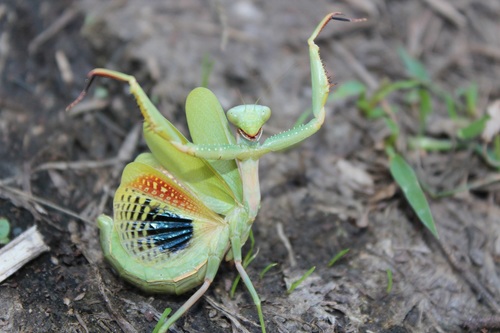
Iris oratoria, commonly known as the Mediterranean mantis, is a fascinating insect belonging to the order Insecta. It is widely observed in the Comunidad Valenciana, among other regions, adding vibrant diversity to the local fauna.
Physical Characteristics:
- Size: Adult females can reach up to 6 centimeters in length, while males are generally smaller.
- Color: Typically, they exhibit a range of green to brown hues, aiding in camouflage amongst vegetation.
- Distinctive Features: One of the most remarkable attributes of Iris oratoria is its "eye spots" located on the hind wings, which it uses to deter predators by making itself appear larger.
Habitat:
- This mantis species thrives in warm and dry environments, commonly found in gardens, fields, and scrublands within the Comunidad Valenciana.
Behavior and Diet:
- Diet: As a carnivorous insect, it primarily preys on small insects such as crickets, flies, and moths, employing its excellent hunting skills.
- Behavior: Known for its characteristic "praying" stance, it remains motionless while waiting to ambush prey with swift strikes of its forelimbs.
Reproduction:
- During mating season, females sometimes exhibit sexual cannibalism, although not as frequently as in some other mantis species.
- Females lay eggs in an ootheca, a foam-like protective casing, which helps safeguard them from environmental hazards.
The Mediterranean mantis is an intriguing part of the ecosystem, often admired for its elegant appearance and vital role in controlling pest populations. In local culture, they are sometimes referred to as "mantis religiosa," although this name is more accurately associated with a different species. Nonetheless, Iris oratoria continues to captivate nature enthusiasts and contribute to the biodiversity of the Comunidad Valenciana.


 360° Views
 Videos
 Mountain bike
 Vall Agenda
 Weather Stations
 Time Travel
 Flora and Fauna