






Sarcophagidae
 Common
 Very common
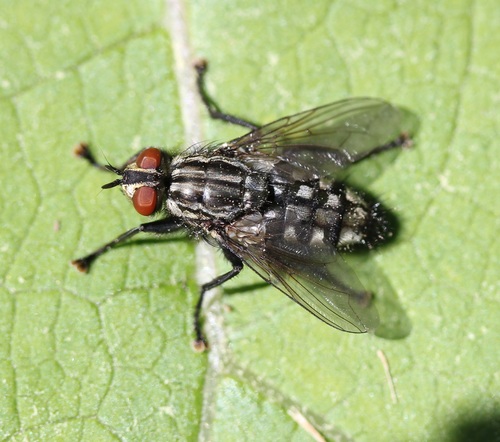
Insecta Sarcophagidae, commonly known as flesh flies, are a family of flies that are distinguished by their striking patterns and feeding habits. This family includes many species, often recognized by their grey coloration and three black stripes on their thorax. The family name, Sarcophagidae, comes from the Greek words "sarco" meaning flesh and "phagein" meaning to eat, reflecting their ecological role.
In the Comunidad Valenciana, these flies play an important role in the ecosystem. They are sometimes referred to locally as "mosca de la carne". While many Sarcophagidae are scavengers, feeding on decaying matter, others have a more diverse diet. Below are some characteristics and roles of these flies:
- Appearance: Flesh flies typically have a checkerboard pattern on their abdomen, red eyes, and bristly hairs on their body.
- Lifecycle: The lifecycle of a flesh fly includes the stages of egg, larva (maggot), pupa, and adult. They are known for having a rapid life cycle, which allows them to thrive in various environments.
- Habitat and Range: They are found in a wide range of habitats including urban areas, forests, and near decomposing organic matter. In the Comunidad Valenciana, they are prevalent due to the mild climate and presence of suitable food sources.
- Ecological Role: As decomposers, flesh flies are crucial in breaking down and recycling nutrients back into the ecosystem. They help in cleaning environments by feeding on dead animals and decaying organic material.
- Human Interaction: While they are beneficial in natural ecosystems, they can be considered pests in urban settings due to their association with decomposition and potential to spread disease.
Understanding and appreciating the role of the Sarcophagidae family helps in maintaining the ecological balance within the Comunidad Valenciana. These flies, although often overlooked, are a vital component of nature's cleanup crew.


 360° Views
 Videos
 Mountain bike
 Vall Agenda
 Weather Stations
 Time Travel
 Flora and Fauna