








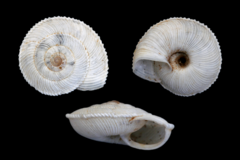

Common limpet
Patella caerulea Very common
 Common
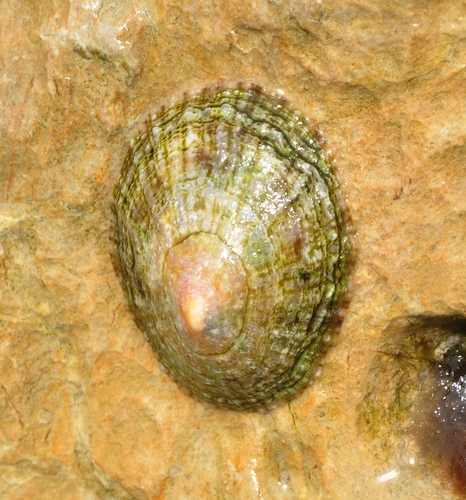
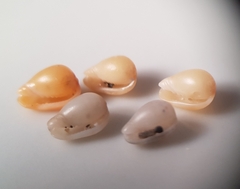
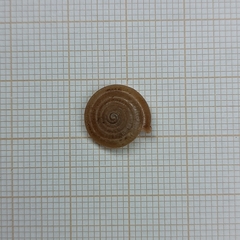
The Mollusca Patella caerulea, commonly referred to in the Comunidad Valenciana as the "llapassa" or "lapas," is a species of sea snail belonging to the class Gastropoda. This marine organism is well-known for its distinctively shaped, conical shell, which can often be observed clinging to rocks in intertidal zones.
Characteristics:
- Shell: The shell of Patella caerulea is generally conical and low, with radial ridges. Its color varies from greenish-brown to gray and often features a bluish tinge, which is where it gets the name "caerulea" (meaning blue).
- Size: Typically, the shell can grow up to 6 cm in diameter, although size may vary depending on environmental conditions.
- Habitat: It is commonly found on rocky shores, where it uses its muscular foot to adhere strongly to the substrate. Patella caerulea is particularly abundant in areas with strong waves.
- Diet: This species grazes on microalgae and biofilm, which it scrapes off rocks using its radula, a specialized feeding organ.
- Adaptations: Patella caerulea has developed the ability to withstand desiccation, allowing it to survive in tidal zones where it may be exposed to air for long periods during low tide.
Ecological Importance:
Patella caerulea plays a crucial role in its ecosystem by contributing to the control of algal growth on rocks, thus maintaining ecological balance in its natural habitat. It also serves as a source of food for various predators, including birds, fish, and other marine organisms.
Understanding and appreciating species like Patella caerulea is vital for the conservation efforts in the Comunidad Valenciana, as they are integral components of the coastal biodiversity that characterize this region.


 360° Views
 Videos
 Mountain bike
 Vall Agenda
 Weather Stations
 Time Travel
 Flora and Fauna