












Jack-o'-lantern mushroom
Omphalotus Common
 Very common
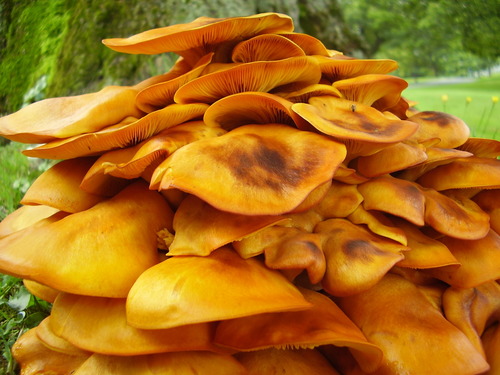
Omphalotus olearius, commonly known as the Jack O'Lantern Mushroom in English, or Seta de Olivo in Spanish, is a captivating and easily recognizable species of fungus found in the Comunidad Valenciana and other parts of Europe. This mushroom is particularly noted for its striking appearance and intriguing characteristics.
- Appearance: The Omphalotus olearius boasts a vibrant orange to orange-yellow cap, which can measure 5 to 20 centimeters in diameter. The cap is typically convex, becoming more funnel-shaped with age. The margins are often wavy, adding to its unique allure.
- Gills: The gills of this mushroom are decurrent, meaning they extend down the stalk, and they share the same bright orange hue as the cap.
- Stalk: Its stalk is firm and can range from 3 to 11 centimeters in height, displaying the same orange coloration, sometimes turning brownish towards the base.
- Bioluminescence: One of the most fascinating features of the Omphalotus olearius is its ability to emit a faint greenish glow in the dark, a characteristic often referred to as bioluminescence. This glow is due to the presence of a luciferase enzyme, creating a fascinating nocturnal display.
- Habitat: This mushroom predominantly grows in clusters on decaying wood, often favoring oak, olive, and cork trees. Its presence is common in the forests of the Comunidad Valenciana.
- Toxicity: Although it has a tempting appearance, the Omphalotus olearius is poisonous and should not be consumed. Ingestion can lead to severe gastrointestinal distress. It should always be admired for its beauty and ecological role rather than as a food source.
The Omphalotus olearius is a marvelous example of the diverse and colorful fungal life in the Comunidad Valenciana. Its striking presence and bioluminescent charm make it a subject of interest for both amateur and seasoned mycologists.


 360° Views
 Videos
 Mountain bike
 Vall Agenda
 Weather Stations
 Time Travel
 Flora and Fauna