






Wild boar
Sus scrofa Very common
 Very common
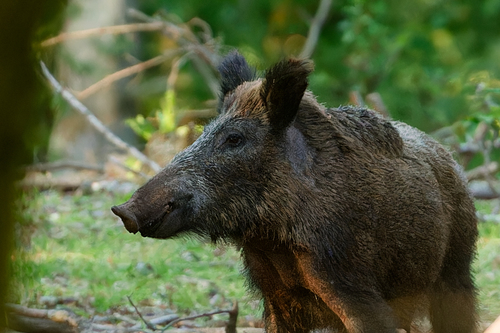
Mammalia Sus scrofa, commonly known as the wild boar or javali as it is called in some regions of the Comunidad Valenciana, is a widely distributed wild pig species native to Eurasia and North Africa. It is known for its adaptability to various habitats, including the forests, scrublands, and agricultural fields of the Comunidad Valenciana.
Physical Description:
- Wild boars generally have a robust and sturdy body, with a large head and short neck.
- Their fur is thick and bristly, usually brown, black, or reddish in color, which helps them blend into their environment.
- Males can be distinguished by their upward-curving tusks, which are used for digging and as a defense mechanism.
Behavior and Diet:
- Wild boars are primarily nocturnal, being most active during the night and resting in dense vegetation during the day.
- They are omnivorous and have a varied diet that includes roots, fruits, seeds, insects, and small animals, making them important seed dispersers in their ecosystem.
- These animals are social creatures and usually form small groups called sounders, typically composed of females and their young.
Ecological Role and Human Interaction:
- The wild boar plays a significant ecological role as a keystone species that helps in the regeneration of forest ecosystems by dispersing seeds and providing prey for predators.
- However, due to their opportunistic feeding habits, they can sometimes cause damage to crops, leading to conflicts with human activities in agricultural zones.
In the Comunidad Valenciana, the wild boar is a common species often seen in natural parks and rural areas, contributing to the region's biodiversity and adding to the rich tapestry of its wildlife heritage.


 360° Views
 Videos
 Mountain bike
 Vall Agenda
 Weather Stations
 Time Travel
 Flora and Fauna