








Queen scallop
Aequipecten opercularis Uncommon
 Uncommon
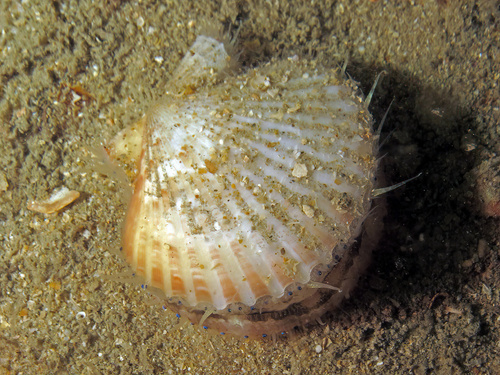
Aequipecten opercularis, commonly known as the Queen Scallop, is a bivalve mollusc from the family Pectinidae, prevalent in the coastal waters of the Comunidad Valenciana and other European seas. This species is highly regarded for its culinary value and ecological significance.
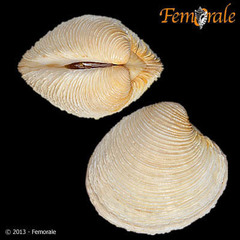
The Queen Scallop is recognized by its distinct fan-shaped shell, which can have a variety of colors, including hues of red, yellow, and brown. These shells usually exhibit radiant bands or striations that add to their beautiful appearance and are responsible for their widespread collection as decorative items.
Here are some key characteristics and interesting facts about Aequipecten opercularis:
- Size: The Queen Scallop typically grows up to 9 cm in diameter, although sizes can vary according to environmental conditions.
- Habitat: It is commonly found in sandy or muddy substrates, often at depths ranging from 20 to 100 meters along the rocky seabeds of the Valencian coast.
- Diet: The species is filter-feeding, primarily consuming plankton and organic particles by filtering water through their gills.
- Reproduction: The reproduction process is fascinating, involving both male and female individuals releasing gametes into the water column, where fertilization occurs externally.
- Local Name: In the Comunidad Valenciana, it is often referred to as "Venera" or "Petxina", drawing from the rich Mediterranean heritage linked to the region.
The Queen Scallop is a part of the rich marine biodiversity of the Comunidad Valenciana, contributing to both the local ecosystem dynamics and the socioeconomic fabric, especially within the fishing and tourism industries.


 360° Views
 Videos
 Mountain bike
 Vall Agenda
 Weather Stations
 Time Travel
 Flora and Fauna