






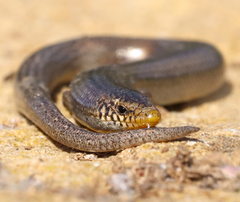
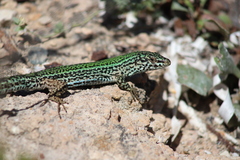

Large psammodromus
Psammodromus algirus Very common
 Very common
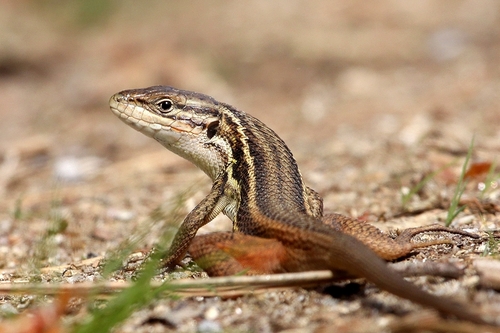
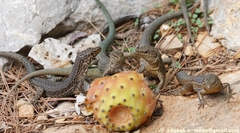
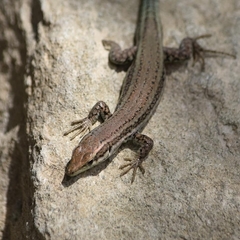
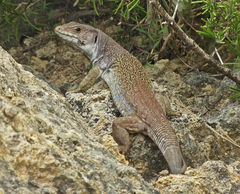
Psammodromus algirus, commonly known as the Algerian Sand Racer or in Spanish, Lagartija Colilarga, is a species of lizard within the Reptilia class that is found throughout the Comunidad Valenciana. This agile reptile is well-adapted to a variety of Mediterranean ecosystems, showcasing its resilience and versatility.
Here are some key features and aspects of the Psammodromus algirus:
- Appearance: This lizard typically has a slender body with a long tail, which can often be twice the length of the body. It features a dorsal coloration ranging from brown to olive, often with distinctive, lighter stripes running along its back.
- Size: Adult individuals can grow up to 20 centimeters in length, including the tail.
- Habitat: Prefers semi-arid environments such as scrublands, pine forests, and areas with abundant brush and rock cover. It is frequently found in sunlit areas where it can bask and regulate its body temperature.
- Diet: Psammodromus algirus primarily feeds on a variety of insects and other small invertebrates, making it an important insectivorous species in its habitat.
- Behavior: Known for its quick movements, this lizard is often seen darting through undergrowth and is expert at using its long tail for balance and maneuverability.
- Reproduction: Breeding typically occurs in the warmer months, where females lay several clutches of eggs that hatch after a few weeks. The offspring are independent from birth.
- Conservation: Presently, there are no major threats that would classify the Algerian Sand Racer as endangered, although habitat loss and climate change could impact their populations over time.
The presence of Psammodromus algirus in the Comunidad Valenciana is a testament to the rich biodiversity supported by the region's diverse habitats.


 360° Views
 Videos
 Mountain bike
 Vall Agenda
 Weather Stations
 Time Travel
 Flora and Fauna