









Oleander
Nerium oleander Very common
 Very common
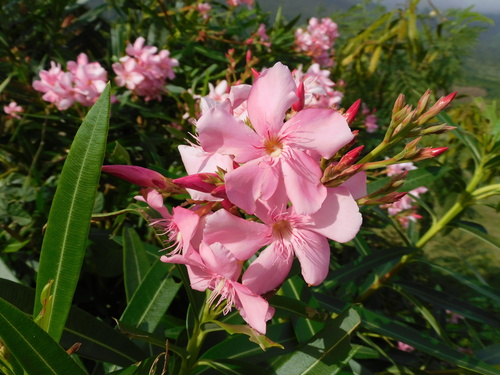
Nerium oleander, commonly known as the oleander or adelfa, is a robust and evergreen shrub native to the Mediterranean region, including the Comunidad Valenciana. Known for its striking, colorful blooms and resilience in various environments, Nerium oleander is often used in landscapes for ornamental purposes.
Characteristics:
- Height and Spread: Typically grows to 2-6 meters in height with a similar spread, forming a dense, bushy appearance.
- Leaves: The leaves are dark green, narrow, and elongated, often arranged in pairs or whorls of three, providing an attractive contrast to the flowers.
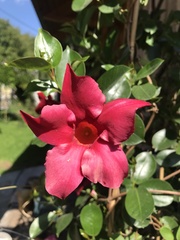
- Flowers: Blooming from spring through late summer, the flowers can be white, pink, red, or yellow, often found in clusters at the end of branches. Each flower has a tubular base with a flat, five-petaled face.
- Fruit: The plant produces long, narrow seed pods that appear after the flowering season.
Habitat and Distribution:
- Widely found along coastal areas and riverbanks in the Comunidad Valenciana, thriving in full sun exposure and well-drained soils.
- It is particularly well-suited to the Mediterranean climate, tolerating drought, heat, and a variety of soil conditions.
Toxicity:
- All parts of the plant are highly toxic if ingested, containing compounds that can affect the heart. Caution should be taken to avoid ingesting or coming into contact with the sap.
Uses:
- Commonly used for decorative purposes in gardens, parks, and along highways due to its attractive flowers and leaves.
- The plant's resilience and low maintenance needs make it a popular choice for landscape architects and gardeners in the region.
Despite its beauty, it is important to handle Nerium oleander with care, appreciating its visual appeal while respecting its potentially hazardous nature.


 360° Views
 Videos
 Mountain bike
 Vall Agenda
 Weather Stations
 Time Travel
 Flora and Fauna