










Hop trefoil
Trifolium campestre Uncommon
 Common
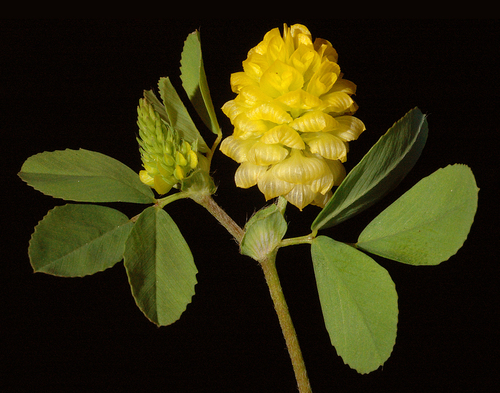
Trifolium campestre, commonly known as the Low Hop Clover, is a species of clover native to Europe and parts of Asia. It is widely found in the Mediterranean region, including the Comunidad Valenciana. Locally, it may be referred to as "trébol amarillo" due to its distinctive yellow flowers.
This plant typically thrives in open fields, along roadsides, and in grassy areas where it enjoys full sun exposure. It is well-adapted to various soil types, which contributes to its widespread presence.
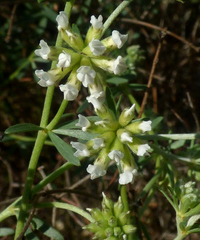
- Appearance: Trifolium campestre is a small, herbaceous plant, generally reaching heights of 10 to 30 centimeters. It has trifoliate leaves, each consisting of three oval leaflets.
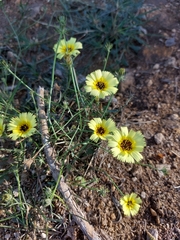
- Flowers: The plant is noted for its bright yellow flowers, which cluster together in small, rounded heads. These flowering heads are reminiscent of hops, which is how it derives its common name "hop clover."
- Blooming Season: The blooming season for Trifolium campestre typically occurs from late spring to early summer, but it can vary depending on local climatic conditions.
- Ecological Importance: This clover is an important plant for pollinators, particularly bees, and it plays a role in nitrogen fixation, enriching the soil where it grows.
- Uses: Although not commonly used in traditional applications, its presence in pastures provides forage for livestock and supports biodiversity in its native habitats.
Due to its adaptability and ecological benefits, Trifolium campestre is a valuable part of the flora biodiversity in areas like the Comunidad Valenciana.


 360° Views
 Videos
 Mountain bike
 Vall Agenda
 Weather Stations
 Time Travel
 Flora and Fauna