








Field elm
Ulmus minor Very common
 Uncommon
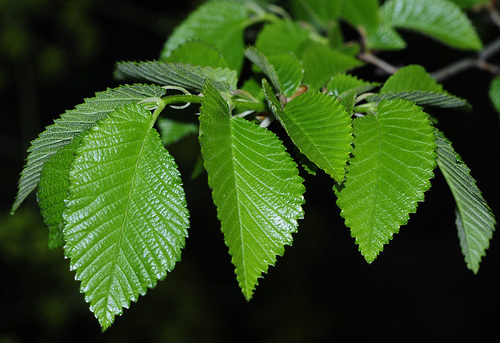
The Ulmus minor, commonly known as the Field Elm or locally in the Comunidad Valenciana as Olmo, is a significant deciduous tree part of the Plantae kingdom. This species is distinguished by its characteristic broad, spreading crown and rough-textured, greyish-brown bark.
Here are some key features of the Ulmus minor:
- Leaves: The leaves are oval to elliptic, with a serrated edge and asymmetrical base, measuring about 4-9 cm in length. They are dark green in color with a rough texture on the top surface and a lighter, slightly downy underside.
- Flowers: Ulmus minor produces small, inconspicuous, red to green flowers that appear in dense clusters before the leaves in early spring.
- Fruit: The fruit is a small, flattened samara, often appearing in clusters, maturing to a pale green or brownish color by late spring.
- Size: This elm can grow up to 30 meters in height, although it is typically shorter, adapting well to a variety of conditions, thriving in the temperate climates found in the Comunidad Valenciana.
- Habitat: Field Elms can often be found lining roadsides, in meadows, or integrated into forested areas across the region due to their adaptable nature.
The Ulmus minor plays an essential role in the local ecosystems, providing habitat and food sources for various species. Furthermore, due to its historical and cultural significance within the local communities, efforts are often made to preserve and protect these majestic trees from threats such as Dutch Elm Disease.


 360° Views
 Videos
 Mountain bike
 Vall Agenda
 Weather Stations
 Time Travel
 Flora and Fauna