










Bay laurel
Laurus nobilis Very common
 Uncommon
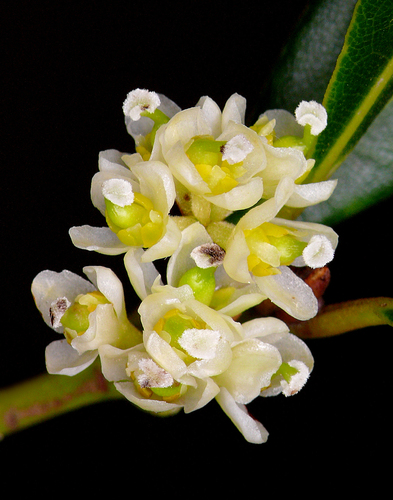
Laurus nobilis, commonly known as the laurel or bay tree, is a species native to the Mediterranean region. In Spanish, it is often referred to as laurel. This evergreen shrub or small tree can grow up to 12 meters tall, although it is typically much shorter in cultivated settings.
Characteristics:
- Leaves: The laurel has dark green, glossy, lance-shaped leaves that are aromatic when crushed. These leaves are commonly used in culinary applications for their distinct flavor.
- Flowers: The plant produces small, yellowish-green flowers that appear in clusters during the spring. These flowers are relatively inconspicuous compared to the plant's aromatic leaves.
- Fruit: After flowering, it bears dark purple to black berries, which attract various bird species.
- Bark: The bark is smooth and green on young branches, turning brown and rougher with age.
Habitat and Distribution:
In the Comunidad Valenciana, Laurus nobilis is widely cultivated but can also be found growing in the wild. It thrives in well-drained soils and is adaptable to both sunny and shaded environments, making it a versatile plant for gardens and natural landscapes in the region.
Cultural and Culinary Uses:
- The leaves of Laurus nobilis are a staple in many Mediterranean cuisines, used to flavor stews, soups, and various dishes.
- It has been historically valued for its symbolism of victory and honor, with laurel wreaths used to crown victors in ancient Roman and Greek traditions.
This plant not only adds culinary value but also enhances gardens with its aromatic presence and elegant structure, making it a beloved species in the Comunidad Valenciana and beyond.


 360° Views
 Videos
 Mountain bike
 Vall Agenda
 Weather Stations
 Time Travel
 Flora and Fauna